Why People Are the Missing Link in Sustainable Business Growth
Businesses don’t improve just by introducing better systems. They improve when people are willing and able to work differently.
Organisations invest considerable time and resources in improving operational efficiency, refining processes, implementing technology and increasing productivity.
They develop strategies, introduce new procedures, restructure departments and establish performance targets.
Yet, despite these efforts, many improvement initiatives fail to deliver the results expected.
Why?
Because improvement is not just an operational exercise. It is a human experience.
Behind every process is a person. Behind every organisational change is a team navigating uncertainty, expectations, emotions and established ways of working.
And sometimes, the greatest obstacle to improvement isn’t the system that needs fixing. It is the human behaviour that keeps the old system in place.
Improvement Requires More Than Changing Processes
When a business identifies an area that needs improvement, the natural response is often to ask:
- What isn’t working?
- Which process needs changing?
- Where are we losing time or money?
- How can we improve productivity?
These are important questions. But there is another question that deserves equal attention:
What makes it difficult for people to change the way they work?
People develop habits, routines and ways of responding that provide familiarity and a sense of security. Even when existing practices are inefficient, employees may resist changing them because the familiar feels safer than the unknown.
A new system may make perfect business sense, but if people don’t understand its purpose, feel excluded from the process or lack confidence in their ability to adapt, implementation becomes difficult.
Sustainable improvement requires people to understand not only what is changing, but also why it matters and how they contribute to its success.
Resistance to Change Is Often a Human Response
Resistance is frequently interpreted as negativity, stubbornness or a lack of commitment.
But what if resistance is communicating something more important?
An employee who questions a new procedure may worry about losing competence or control. A manager who struggles to delegate may fear standards will slip. A team member who avoids a new responsibility may lack confidence, not motivation.
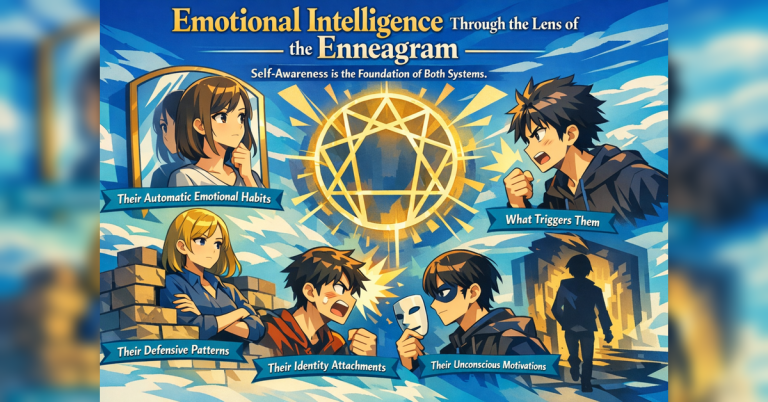
Through the lens of the Enneagram, we can begin to understand why people respond differently to change.
Some seek certainty and reassurance. Others want to maintain control, prove their competence, avoid conflict or preserve familiar relationships.
The behaviour may look like resistance, but the underlying motivation can be very different.
Recognising these patterns helps leaders move beyond labelling people as difficult and address the underlying causes of their behaviour.
Instead of asking, “Why won’t people change?”, consider asking, “What might they be trying to protect?”
Safety Creates the Conditions for Improvement
People can’t contribute meaningfully to improvement when they’re afraid to make mistakes, ask questions, or challenge existing practices.
When employees fear criticism or blame at work, they focus on protecting themselves instead of contributing openly.
They become less willing to share ideas, acknowledge mistakes or raise concerns.
Psychological safety doesn’t mean eliminating accountability or easing performance expectations.
It means creating an environment where people feel safe speaking honestly, taking appropriate risks, learning from mistakes, and finding solutions without fear of humiliation.
Leaders play a significant role in establishing this environment.
How do they respond when something goes wrong? Do they get defensive or remain curious? Do they rush to assign blame, or focus on what they can learn?
How these interactions unfold determines whether improvement becomes a shared responsibility or just another management directive.
Self-Awareness Is an Essential Part of Organisational Improvement
We often focus on improving employees’ skills, systems, and performance, while overlooking the unconscious patterns that shape our own behaviour.
Imagine a manager who wants to promote accountability but struggles to have tough conversations.
Or a leader who champions innovation but feels uneasy when employees question established ways of thinking.
Or a business owner who wants to empower the team but struggles to let go of control.
These contradictions can undermine even the best improvement strategies.
Integrative coaching offers a chance to explore how thoughts, emotions, physical responses, and behaviour are connected.
The Enneagram offers insight into the underlying motivations and habitual strategies that shape how people respond to pressure, uncertainty, conflict, and responsibility.
Becoming aware of automatic reactions gives people more opportunity to choose how they respond.
This is where personal development and organisational improvement begin to intersect.
Sustainable Improvement Is a Shared Responsibility
Improvement cannot belong exclusively to management, operations or human resources.
It needs to become part of how people think, communicate, collaborate, and take responsibility for their contributions.
This requires leaders to:
- Communicate the purpose behind improvement initiatives.
- Involve employees in identifying challenges and developing solutions.
- Encourage honest feedback and constructive conversations.
- Recognise individual differences in how people experience change.
- Create opportunities for learning, experimentation and reflection.
- Model the behaviours they expect from others.
Most importantly, improvement must become an ongoing practice rather than a once-off project.
The goal is not just to make the organisation more efficient. It is to build an organisation where people feel confident, capable and willing to contribute to continuous improvement.
The Human Side of Business Growth
Operational excellence and human development aren’t competing priorities; each depends on the other.
Better systems pave the way for better performance, but people bring them to life.
When employees feel heard, see how their contributions matter, and feel confident challenging existing ways of working, improvement becomes more than a management initiative—it becomes part of the organisational culture.
Perhaps the most important question for any business is not simply:
“What do we need to improve?”
It is:
“What needs to change in the way we think, behave and work together to make that improvement sustainable?”
Because ultimately, businesses don’t transform themselves.
People do.
#PersonalDevelopment #LeadershipDevelopment #Enneagram #IntegrativeCoaching #EmotionalIntelligence