Emotional Intelligence Through the Lens of the Enneagram
Emotional intelligence involves recognising, controlling, and successfully navigating emotions, both internally and in interactions with others.
Leaders and individuals lean on emotional intelligence to strengthen communication, decision-making, conflict resolution, resilience, and trust in relationships.
Emotional intelligence concerns understanding and managing the feelings that affect how we act.
It means understanding what drives emotional behaviour.
The Enneagram provides an effective framework for uncovering recurring emotional patterns and helping individuals understand the specific drivers of their emotions.
By using the Enneagram, leaders and individuals can gain unique knowledge of their emotional dynamics, thereby directly increasing their emotional intelligence.
The Enneagram and Emotional Intelligence
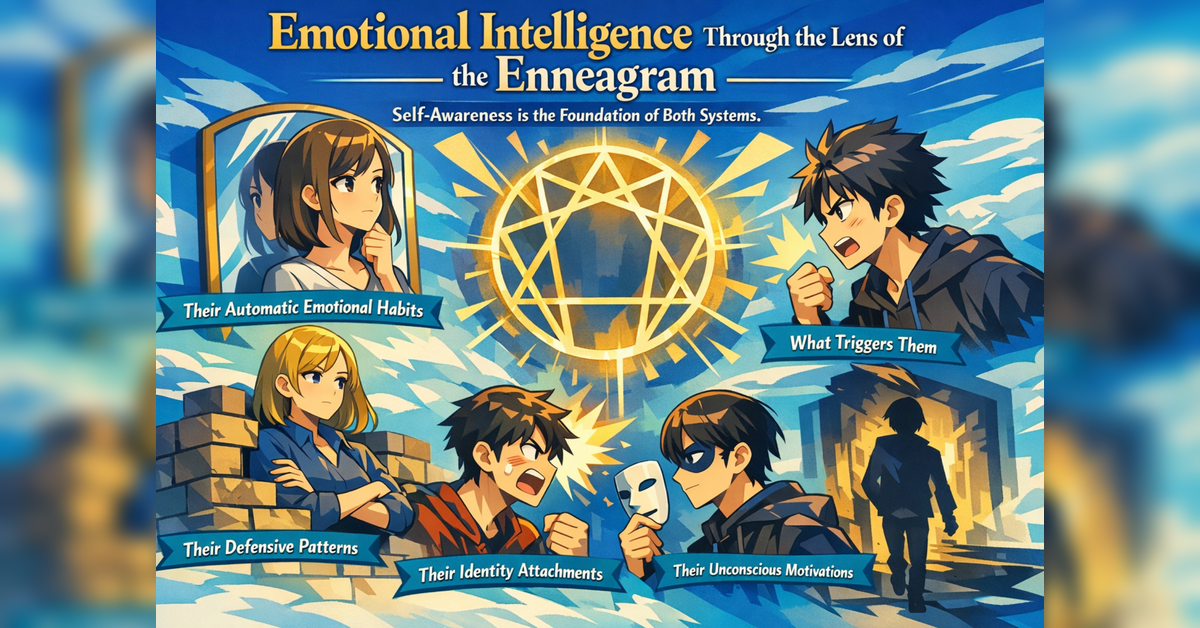
The Enneagram is not just a personality system; it is a map of unconscious emotional patterns. Each type reveals a distinct way of coping with life, relationships, fear, pressure, and identity that forms early and becomes ingrained.
The challenge is that every type also develops a specific emotional blind spot.
These blind spots shape how people:
- react under stress,
- avoid discomfort,
- seek validation,
- manage vulnerability,
- and protect their identity.
Emotional intelligence starts as soon as these patterns are observed.
Self-Awareness: Seeing the Pattern
Self-awareness is central to emotional intelligence. Many people believe they respond directly to situations, but often filter their reactions through their Enneagram type.
For example:
- Type 1 may experience frustration when reality falls short of internal standards.
- Type 2 may suppress personal needs to maintain connection.
- Type 3 may disconnect from authentic feelings in pursuit of achievement.
- Type 4 may intensify emotion to maintain identity and meaning.
- Type 5 may withdraw emotionally to preserve energy and safety.
- Type 6 may become hyper-vigilant in the face of uncertainty.
- Type 7 may avoid pain through distraction or by focusing on the future.
- Type 8 may protect vulnerability through strength and control.
- Type 9 may minimise conflict by disconnecting from priorities and emotions.
Without awareness, these responses seem automatic and justified. Building self-awareness allows people to recognise these reactions as patterns influenced by their Enneagram type. Realising this link is fundamental to developing emotional intelligence.
Emotional Regulation: Responding Instead of Reacting
Emotional intelligence is not about not having feelings. It’s about recognising and understanding our emotions, even when they are very strong. The Enneagram is a tool that helps people recognise their typical emotional responses and change the patterns that lead them to react automatically.
For example:
- A Type 8 may notice the impulse to intensify, then pause and soften.
- A Type 6 may recognise anxiety-driven thinking before catastrophising.
- A Type 2 may identify resentment forming beneath excessive helping.
- A Type 3 may realise productivity is masking exhaustion.
The aim is not to eliminate emotion. It is to create a pause between the stimulus and the response. In this space, leaders gain greater self-awareness and empowerment, fostering conscious leadership that transforms them and their teams alike.
Empathy: Understanding Others Beyond Yourself
We often assume others share our emotions and perspectives. The Enneagram helps us understand and appreciate different emotional experiences.
A Type 5’s withdrawal is not necessarily rejection.
A Type 9’s silence is not always agreement.
A Type 1’s correction may come from a desire for integrity, not criticism.
A Type 7’s optimism may mask discomfort with pain.
By recognising the unique ways people express emotions through the Enneagram, we can actively reduce misunderstandings and foster real empathy. The core message is to better understand perspectives beyond our own emotional view.
Emotional Intelligence in Leadership
Leaders with emotional intelligence foster psychological safety, trust, and clarity. Understanding your Enneagram type is essential for recognising how it shapes your leadership style.
For example:
- A Type 3 leader may unintentionally create performance-driven cultures.
- A Type 6 leader may over-manage risk and uncertainty.
- A Type 8 leader may create a level of intensity that others experience as pressure.
- A Type 9 leader may avoid necessary conflict to preserve harmony.
The Enneagram indicates that leadership challenges often arise from emotional habits rather than strategic problems. As leaders become more aware of their behaviours, they typically respond less reactively and more intentionally.
The Shadow Side of Emotional Intelligence
Emotional intelligence can sometimes be more about performance than genuine feeling.
They might use words that stir feelings, but they don’t show real openness.
They might think a lot about their feelings rather than really feel them.
They might focus more on how they are seen by others instead of being real and genuine.
The Enneagram reveals subtle defences, highlighting how true emotional intelligence is not about displaying growth but about staying present with discomfort, complexity, and vulnerability rather than falling back into old patterns.
Growth Beyond Personality
The Enneagram reveals we are more than our automatic responses. It helps us recognise and detach from the frameworks we use to manage life. In doing so, our emotional intelligence can grow.
This means:
- becoming less reactive,
- less defensive,
- less controlled by unconscious emotional habits.
As we notice what has operated automatically, we grow more flexible, grounded, and emotionally available. This happens not by changing who we are, but by understanding and moving beyond our patterns. This is the transformation the Enneagram enables.
The Real Work
Emotional intelligence is often seen as a skill that we can learn. When we view it through the lens of the Enneagram, it becomes something much deeper. It is like a trip where we look at ourselves, learn about who we are, and change from the inside.
It asks difficult questions:
* Which feeling do I stay away from the most?
* What part of myself am I trying to keep safe?
* What habit comes back when I am stressed?
* What feelings am I not ready to experience?
These questions move emotional intelligence beyond performance and into integration.
The Invitation
The Enneagram goes beyond explaining personality; it exposes the emotional structure underlying it. Recognising this opens the door to significant personal growth. But what role does emotional intelligence play in this process? Emotional intelligence isn’t about how calm, composed, or articulate you seem.
Your level of emotional intelligence is reflected in your ability to stay aware of yourself as you navigate emotions, pressure, relationships, and uncertainty. Integration happens as you recognise your patterns and gain freedom from them; this integration of self-awareness and pattern recognition marks the true beginning of emotional intelligence.