Powerful Ways to Create a More Human Work-Life Balance
For years, we have been told that successful people know how to achieve work-life balance.
Create boundaries.
Manage your time.
Prioritise your wellbeing.
Switch off at five.
Be fully present at work and fully present at home.
It sounds wonderful.
It also sounds exhausting.
Because what if the pursuit of balance has become another performance standard?
Another thing we believe we should be doing perfectly?
In reality, life doesn’t split into equal parts. Some periods require more from us professionally, while others demand more personally. Sometimes we have energy; other times, we don’t.
Perhaps the goal isn’t to perfectly balance work and life.
Perhaps the goal is to become more human within both.
We Are Not Two People
The language of “work-life balance” suggests that work and life are separate entities competing for our limited attention.
But we don’t leave ourselves at the office.
The anxious leader goes home.
The exhausted parent arrives at work.
The unresolved conflict follows us into the next meeting.
The excitement about a personal milestone shapes how we show up professionally.
We are one person moving through different environments.
And that means the question isn’t simply:
“How do I divide my time equally?”
It is:
“How do I remain connected to myself while responding to what life requires?”
That is a very different question.
The Problem with the Perfect Balance
The pursuit of perfect balance can quietly become another form of perfectionism.
You have the perfect morning routine.
The perfect calendar.
The perfect boundaries.
The perfect exercise schedule.
The perfect amount of time with your family.
And somehow, you are still exhausted.
Why?
Because human beings are not machines designed for optimisation.
Life is unpredictable.
Children get sick.
Businesses experience difficult seasons.
Parents age.
Opportunities appear unexpectedly.
Relationships need attention.
Sometimes work needs more of you.
Sometimes life does.
Trying to maintain the same equilibrium every day ignores the natural rhythms of being human.
Work-life balance may therefore be better understood as something that shifts over time, rather than something we achieve perfectly every day.
The Enneagram: Why Balance Looks Different for Everyone
The Enneagram offers another important perspective.
We don’t all pursue balance for the same reasons.
A Type One may turn balance into another standard to achieve.
A Type Three may optimise every minute in the pursuit of productivity.
A Type Six may struggle to switch off because something might go wrong.A Type Seven may fill every available space with activity and possibility.
A Type Nine may sacrifice their own priorities to keep everyone else comfortable.
The external behaviour may look like “good work-life balance.”
But internally, the person may still be driven by fear, pressure, avoidance, or the need to prove their worth.
This is why simply creating better boundaries isn’t always enough. We need to understand the pattern underneath our behaviour.
Becoming More Human Means Becoming More Aware
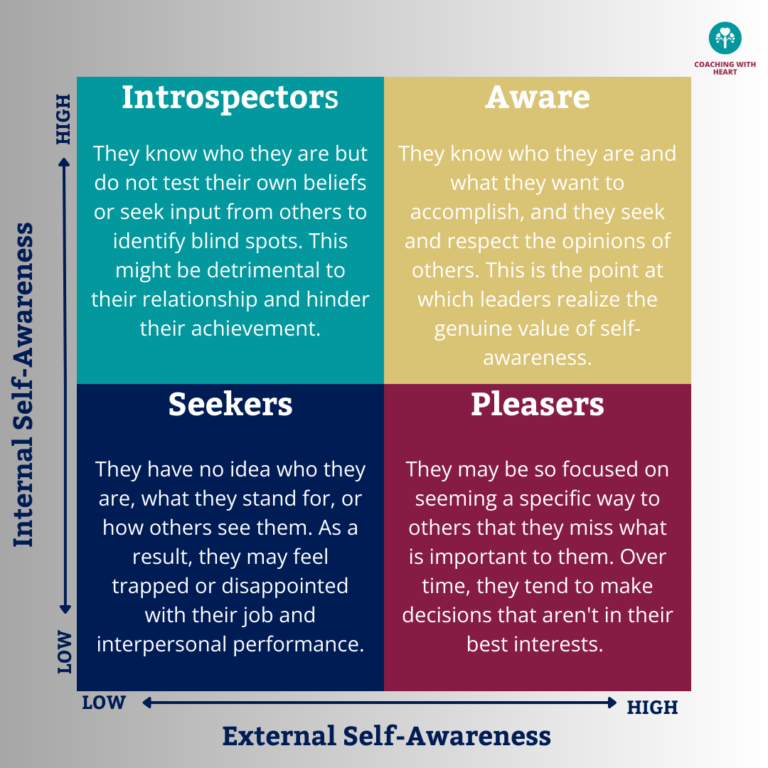
Integrative coaching asks us to look beyond the calendar.
What is happening inside you?
What are you feeling?
What are you avoiding?
What are you trying to prove?
Where are you saying yes when you mean no?
Where are you performing strength when what you actually need is support?
These questions take us beneath productivity and into self-awareness.
Because sometimes the person who says, “I just need better time management,” actually needs permission to stop proving themselves.
Sometimes the person who cannot switch off doesn’t have a scheduling problem.
They have a safety problem.
Sometimes the person who is constantly busy isn’t passionate about productivity.
They are avoiding stillness.
The behaviour is visible.
The need underneath it is often invisible.
What If Some Seasons Are Supposed to Be Uneven?
Perhaps we need to stop treating imbalance as evidence that we are failing.
Some seasons will bring your career to the forefront.
Some seasons will call for more of you.
There will be seasons of growth.
Seasons of grief.
Seasons of uncertainty.
Seasons when simply getting through the day is enough.
The question isn’t whether your life is perfectly balanced.
It is whether you consciously choose where your energy goes—or unconsciously let your patterns choose for you.
That distinction matters.
From Balance to Congruence
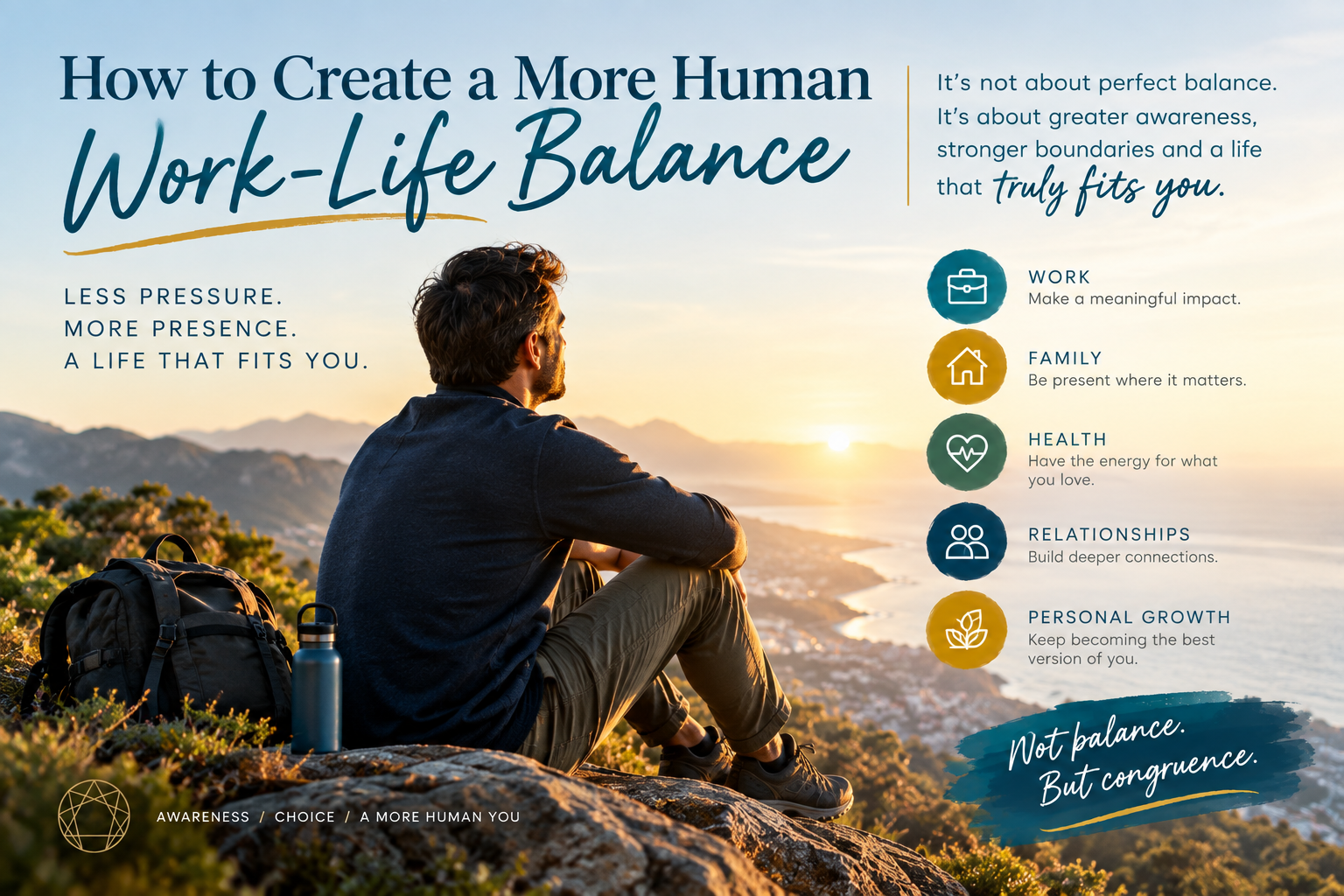
Maybe a better goal than work-life balance is congruence.
Congruence means the way you live is increasingly aligned with what matters to you.
It means your calendar reflects your values.
Your boundaries reflect your needs.
Your leadership reflects who you actually are.
Your ambition doesn’t require you to abandon yourself.
And your personal life doesn’t require you to become someone completely different from the person you are at work.
You don’t need two identities.
You need greater integration.
The Leadership Question
This becomes particularly important for leaders.
If you consistently demonstrate competence, strength, certainty, or control, your team will also perceive and experience that performance.
Encouraging employees to take leave or providing flexible working arrangements doesn’t automatically make leadership more humane.
It feels more genuine when leaders show that embracing their humanity isn’t a sign of weak leadership.
You can be ambitious and tired.
Capable and uncertain.
Strong and vulnerable.
Committed and in need of rest.
Successful and still figuring things out.
These are not contradictions.
They are part of being human.
Perhaps We Need a Different Question
Instead of asking:
“How do I achieve work-life balance?”
Perhaps ask:
“What does being fully human require from me in this season of my life?”
That question allows for movement.
It allows for imperfection.