The Truth About Leadership Success
In a world of constant change, complexity, and expectation, leadership is no longer just about strategy, skills, or results. The modern leader must also carry emotional agility, self-awareness, and the capacity to adapt — both inwardly and outwardly. In 2026, especially when teams are more diverse, workplaces are more fluid, and uncertainty is more common, a strong case can be made: every leader needs a personality framework.
A personality framework is not a magic formula for behaviour. It is a map, a way to understand the internal wiring that shapes how we think, feel, react, and lead.
Here’s why such a framework is more essential than ever, for the depth of your growth.
Clarity of Self: The Foundation of Self-Awareness
Leadership begins within. As highlighted in a referenced article, effective leadership is grounded in self-awareness, self-management, and empathy.
Without clarity about our default responses, our fears, triggers, and coping styles, we remain blind to how we may unconsciously show up in teams: controlling, avoidant, reactive, or overly accommodating.
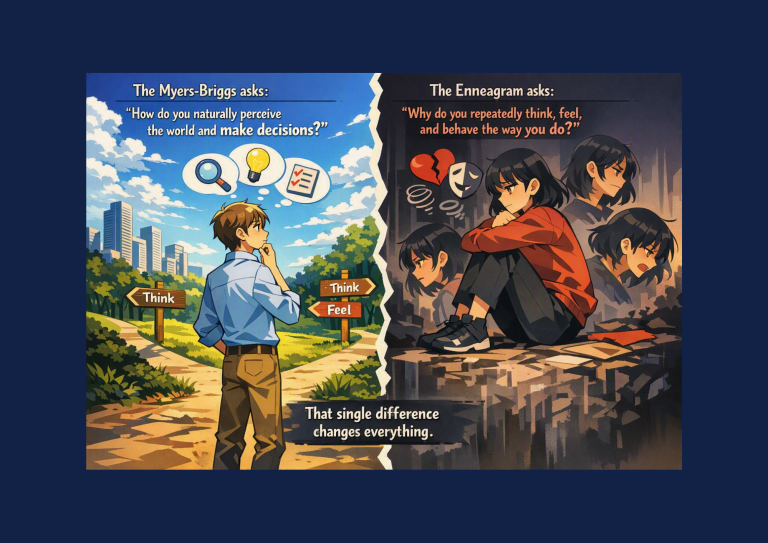
A personality framework, such as the Enneagram, Myers-Briggs Type Indicator (MBTI) or other established systems, provides a structured way to observe these tendencies. It reveals our areas of strength, where we face challenges under pressure, and allows us to lead with intention instead of habit. These ideas are discussed in The Journal and by The Myers-Briggs Company.
In a rapidly changing environment, self-awareness is not simply desirable; it is an essential leadership skill.
Understanding Others: A Path to Empathy, Inclusion and Trust
Modern organisations are more diverse than ever: people from different generations, cultures, backgrounds, and working styles. As a leader, you’ll rarely walk a path defined by sameness.
Personality frameworks help you appreciate differences without judgment. They give language to diverse communication styles, decision-making preferences, and motivations. When leaders understand whether someone naturally seeks structure or thrives on spontaneity, whether someone processes internally or expresses externally, the foundation for empathy, trust, and psychological safety is strengthened. This understanding doesn’t pigeonhole people. It frees you to lead individuals, not clones.
Enhancing Emotional Intelligence and Resilience
Recent research underscores that emotional intelligence, the ability to recognise and manage your own and others’ emotions, is among the strongest predictors of effective leadership and team cohesion.
Personality frameworks support the cultivation of emotional intelligence: they illuminate how stress shows up for us, how we defend ourselves, and how we avoid discomfort. Once visible, these patterns can be met with conscious attention and inner work.
In a world where resilience is tested, in hybrid workplaces, in uncertainty, in shifting expectations, leaders who know themselves become more stable anchors. They respond instead of reacting. They lead with humility and insight instead of fear and rigidity.
Adapting Leadership Style to Context — With Integrity
Leadership constantly demands adaptation. What works in one context may fail in another. A startup demands dynamism; a mature organisation demands structure; a crisis demands calm clarity.
But adaptation does not mean betraying yourself. A personality framework gives you both ground and flexibility. It helps you recognise when you are leaning too much on your default strengths, for example, being overly directive, and when you need to bring in balancing behaviours.
Thus, you lead not by forcing shape, but by choosing with awareness.
Building Sustainable Leadership — For You and Your Team
So often, leadership development focuses on skills or output: deliverables, KPIs, projects, performance. But what sustains leaders, and their teams, over time is inner clarity, psychological health, and relational awareness.
A personality framework is essential for supporting long-term growth: it helps leaders avoid burnout, prevents chronic patterns of overwork or conflict, and builds healthier relationships. Teams benefit from leaders who understand themselves, understand others, and lead from presence rather than projection.
This evolution—from management to mindful leadership—defines the essential path forward.
Three Reflective Self-Inquiry Prompts
If you are a leader — or stepping into leadership — and want to begin working with a personality framework, here are three prompts to start your inner investigation:
- What patterns emerge in moments of stress or conflict — and what do they reveal about my default coping style?
(This helps identify unconscious reactions shaped by personality.) - Which behaviours of those I lead trigger me most — and might these reflect parts of myself I haven’t integrated?
(This helps uncover projection and bias, and fosters empathy.) - If I led from awareness of my personality strengths and limitations, how would I show up differently in decisions, communication, and culture?
(This invites intentional leadership rather than reactive leadership.)
A Final Word
In 2026, leadership demands more than strategy, vision and execution. It requires awareness, emotional maturity, adaptability, and humanity.
A personality framework is not a perfect map. It will not tell you precisely what to do or who to be, and it should never be used as a rigid label.
But as a tool for reflection, presence, and growth, it remains unparalleled.
When we lead with clarity about who we are, not just what we do, we lead with heart, integrity, and resilience. We create environments where people feel seen, understood, and valued, not because of performance, but because of humanity.
And in a world longing for authentic leadership, perhaps that is the most meaningful legacy we can build.