The Echoes of Generational Hidden Patterns
Not long ago, I had a seemingly ordinary exchange with my brother while trying to figure out a six-digit password. I only managed to catch the first four digits, and when I said, “It doesn’t fit,” he replied simply:
“You must listen.”
And in that moment, I didn’t just hear my brother; I listened to my father.
It was a sudden recognition, a voice spanning generations, resonating in words, tone, and energy. What initially seemed like a small, practical exchange became, for me, a profound moment of realisation. It reminded me how easily the voices of our ancestors live within us, shaping our thoughts, speech, and relationships. It also revealed how patterns from one generation to the next often repeat without our noticing.
The Echo of Generations
Carl Jung spoke of the collective unconscious—the deep reservoir of inherited experience that resides within each of us. The teachings of A.H. Almaas, particularly in The Pearl Beyond Price, describe how our early object relations —our fundamental relationships with caregivers —become internal structures that influence how we perceive the world.
What I heard in my brother’s voice was more than just a memory. It was a transmission of those internal structures, shaped in childhood and passed down through family dynamics. These patterns become so familiar that they seem like truth, like the natural order of things. But often, they are merely echoes, repetitions of ways of being that may no longer serve us.
The Pattern Within
This is what I have learned through my own journey and inner work: until you are willing to look within and identify the hidden, repeating patterns that you already know do not work, you cannot stop them.
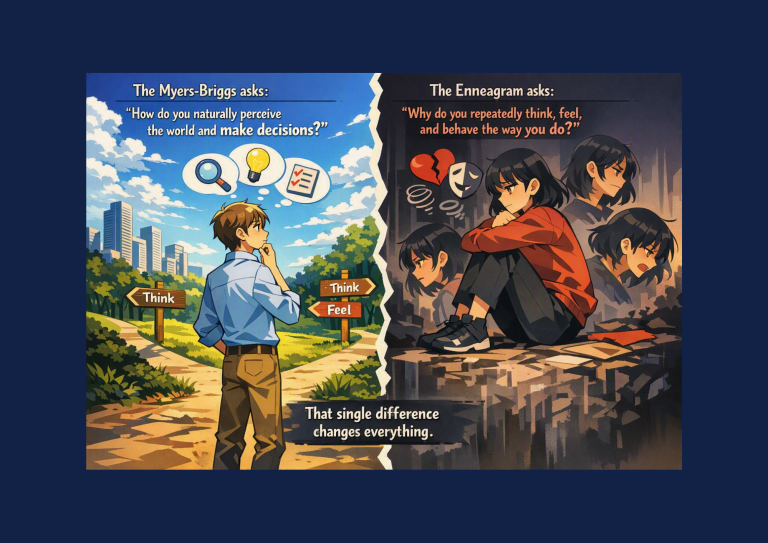
The Enneagram is one of the most powerful tools for discovering unconscious patterns. It reveals not only our strengths but also the coping mechanisms we create to feel safe, loved, or in control. Over time, these strategies become ingrained in our identity. We start to believe this is who I am, while in reality, they are merely patterns—protective but limiting.
Through my own exploration, I have found that self-sabotage, unhelpful reactions, and even the voices in my head often originate from these inherited and learned patterns. Warren Munitz’s integrative approach has deepened this understanding by guiding me inward, toward the awareness beneath the story, the quiet space untouched by conditioning.
Hearing the Father’s Voice
When I heard my father’s voice through my brother, I was struck not by the words themselves but by the energy behind them. The tone conveyed authority, expectation, and an implicit demand: You must listen.
This wasn’t solely about the password. It was about how authority was conveyed within my family. It was about how listening was equated with obedience, and how guidance often came in the form of instruction rather than dialogue. In that moment, I realised how those early dynamics still resided within me, and how they appeared in my own life and leadership.
This is the core of Almaas’s object relations theory: how our early bonds and interactions become internalised, shaping our sense of self and others. Unless we become aware of them, we continue to replay those dynamics, projecting them onto colleagues, partners, and even ourselves.
Breaking the Cycle
The voices of our ancestors are not inherently harmful. They carry wisdom, resilience, and history. However, they also carry wounds, fears, and unexamined patterns. To live fully in our own potential, we must discern which voices lead us towards truth, and which keep us trapped in patterns that no longer serve us.
For me, this work has meant pausing when I hear those voices, whether they come from within me, my family, or even society, and asking:
- Is this my truth, or is this a pattern I inherited?
- Does this way of being align with my essence, or is it simply familiar?
- What would it look like to respond from presence rather than repetition?
Why This Matters
In leadership, these unconscious voices often influence how we lead teams, make decisions, and relate to others. Without awareness, we might find ourselves repeating the same cycles of control, avoidance, or over-responsibility that we learned long ago.
But when we pause and listen deeply, not just to the voices of the past but to the essence within us, we begin to make different choices. We stop reacting automatically and start leading with clarity and authenticity.
A Closing Reflection
That simple moment with my brother reminded me that transformation starts with awareness. The voices of our ancestors will always be part of us, but they do not have to define us.
When we are willing to look within, to recognise the repetitive patterns we know don’t work, and to listen not only to the voices of the past but also to the truth of our own being, we open the door to genuine change. There are no quick fixes. However, there is always the potential for liberation if we are willing to listen in a different way.
Reflective Journaling Prompts
- When was the last time you heard a parent or ancestor’s “voice” come through in your own words or actions? How did it feel?
- What patterns in your family system repeat themselves in your relationships or leadership style?
- Which of these inherited voices serve you today, and which ones keep you stuck?
- How do you respond when you feel an old, familiar pattern rising—do you pause, or do you act on autopilot?
- What would it look like to respond from your essence—your truest self—rather than from repetition?